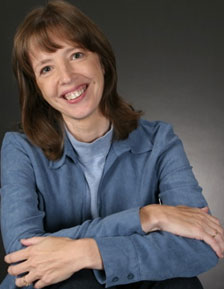
Please Welcome...Sharon Hinck
What a joy to have Christian author Sharon Hinck as our interview guest at WhereTheMapEnds.com. Sharon likes to say she writes stories for the hero in all of us. She believes that God’s grace leaks out through the broken places in our lives and she loves showing the courage of characters whether in epic battles or the brave choices made in ordinary life. I first encountered Sharon's work when I was running the fiction department at Realms/Strang. Here was this obviously talented woman writing an epic fantasy about a soccer mom sucked into an alternate world where she found she had special powers. I was immediately impressed.
I finally met Sharon in person at the Mount Hermon Christian Writer's
Conference in 2006. I was struck by her genuineness and sincerity.
Plus she's perky and upbeat and is quick with an encouraging word or a
listening ear. By that time I was running the fiction department at NavPress and I really wanted to get her fantasy series published. I actually had to convince her to pitch me that series at NavPress. She says she remembers getting home from the conference and finding my e-mail saying, "Where is it? Send it now!"
At the same time, Dave Long at Bethany House was after Sharon for her
slightly more realistic series, called
The Secret Life of Becky
Miller, about a regular mom who has fantastic adventures but within
our "real" world. The next time I saw Sharon was on the convention center floor at the ICRS convention in 2006. To promote her Becky Miller series she was walking around the convention floor wearing a Supermom outfit and long red cape. The girl's got guts, too!
As one of my final acts at NavPress I was able to convince the
publishing committee there to agree to publish Sharon's fantasy
series, beginning with
The Restorer.
I'm very proud of that achievement, for though Sharon loves her Becky
Miller series, I know her heart is most fully engaged into her epic
fantasies. Please welcome a delightful new star in the world of Christian speculative fiction: Sharon Hinck. WhereTheMapEnds: Catch us up with what's going on in your life.
Sharon Hinck: In between revisions and edits and proofing several
current projects, I had a marvelous time at the International
Christian Retail Show and on the
Fantasy Fiction Tour this summer,
spreading the word about Christian fiction, and fantasy in particular.
On the tour I was blown away by the enthusiasm for faith-based
fantasy—from both CBA and general market bookstores and readers. It
was a treat getting to know three other CBA fantasy authors (Bryan
Davis, Wayne Batson, and
Christopher Hopper) and to “talk shop” as
well as pray for each other and promote each other’s work. And of course, we got to hang out in bookstores wearing cloaks and brandishing battle-ready swords. Doesn’t get more fun than that! WhereTheMapEnds: Way cool. Did you feel the tour achieved its goals? What impact did it have? Sharon Hinck: We had several goals—to serve our readers, publishers, and the retailers; to build awareness of the Christian fantasy genre; and to glorify God in any opportunities along the way. We had amazing opportunities to talk about “God stuff” and Christian fiction, and to encourage people, answer questions, and even pray with folks. Many retailers we spoke with were intrigued by the fact that four authors from four different publishers were working together. A side benefit that I didn’t anticipate was the large amount of press we generated—in newspapers around the country. I continue to see lasting impact because of the increased awareness of the genre. WhereTheMapEnds: And that's a win for everyone who loves Christian speculative fiction. Thank you for your work to promote the genres we love. What is your favorite speculative novel of all time (Christian or secular) and why is that your favorite? Sharon Hinck: Perelandra by C.S. Lewis. The playful audacity of the premise (What if there is life on Venus, and it is a world that hasn’t yet fallen?) showed me that it’s okay to stretch our imaginations. His depiction of temptation helped me understand the Fall in a way I never had before. His description of worship made me hungry for heaven. WhereTheMapEnds: What made you want to write Christian speculative fiction? Sharon Hinck: I read a variety of genres, but have always particularly enjoyed fantasy. I wanted more! And I wanted a story with a relatable female protagonist, stories of courage and sacrifice, and the freedom to delve into Christian themes and questions. Scenes began calling to me, characters started talking, and I had to tell their story. WhereTheMapEnds: Indeed, one of the reasons I was able to get NavPress to agree to publish a fantasy trilogy (something they never thought they'd be doing!) was that your protagonist was so "relatable," so much like the core CBA fiction reader: a soccer mom who loves her family but may sometimes struggle with depression. That keyhole character is one of the secrets of your series' success in a market that is usually closed to "weird" stories.
Sharon Hinck: Madeleine L’Engle said, “A book comes and says, ‘Write
me.’ My job is to try to serve it to the best of my ability, which is
never good enough, but all I can do is listen to it, do what it tells
me and collaborate.” I experienced that sense as I wrote the Restorer books. I kept reminding God, “You do know the odds against a new novelist selling a manuscript, right? And You do know that the genre most CBA houses are least interested in is fantasy, right? You do realize that the direction this story is going creates a number of challenges, right?” But my grumbling didn’t matter. The story demanded to be told. WhereTheMapEnds: I get that sense, too, as I operate WhereTheMapEnds.com and when I move forward with Marcher Lord Press. I can't always point to exactly how my efforts are glorifying God in a direct way, and yet I'm consistently encouraged in my spirit that I'm doing the right thing. I secretly believe that God deeply loves Christian speculative fiction.
So tell us, Sharon, how was your first idea for a Christian
speculative novel received (by anyone: spouse, friends, parents,
agent, publisher, readers, reviewers, etc.)?
Sharon Hinck: My writing group was enthusiastic when I began reading
The Restorer at our meetings. But there were several members who were
fans of speculative fiction, so they were an easy audience.
The gals in my small-group Bible study (very core CBA demographic)
said, “Oh I don’t read that kind of story”—but I asked a few to try it
anyway, as “test readers.” They ended up being swept into the
story—giving the manuscript of The Restorer to their husbands and
children, discussing it with friends. That excitement and level of
engagement gave me hope that the story might be able to reach more
than the spec-fic niche.
Because I swim in a constant murky swamp of self-doubt, it took firm
prodding from God, family, and friends, to get me to submit the
manuscript to industry professionals, especially when I knew the genre
wasn’t a “slam-dunk,” easy-to-sell kind of story. I toddled off to my
first writer’s conference, with a scenario all figured out. I figured
I would hear, “Go home. You don’t have the writing chops.” I think
part of me hoped that then I’d be able to put it to rest.
Instead, I was bewildered and a little overwhelmed when industry folk
whom I deeply admired were interested in my writing. I kept developing
the next books in the Restorer series, waiting for the right open
door. Meanwhile, Bethany House contracted my first novels to be
published, The Secret Life of Becky Miller, and
Renovating Becky
Miller. I was able to weave some elements of adventure and fantasy
into those humorous women’s fiction stories, and kept hoping that one
day I’d be able to publish The Restorer.
Of course, old friends who have read The Restorer since its release
have emailed me to say, “I always used to think you were normal!” Now
that folks can see how truly weird my brain is, I’m afraid I’ve ruined
any of my efforts to pass as normal.
WhereTheMapEnds: Well, at least you're among fellow non-normal folks
here! So, Sharon, w hat have you seen that discourages or frustrates
you about Christian speculative fiction writing and/or publishing?
Sharon Hinck: I’m thrilled by the variety. I’ve always believed that
we need all the arts to even begin to communicate about our awesome
and multi-faceted God. We need pipe organs and electric guitars. We
need oil paintings and pencil sketches. We need authors writing in all
genres with all kinds of different voices. The range of Christian
fiction these days is amazing. And even within the speculative fiction
genres we have an exciting variety of styles, voices, and target
audiences. It makes my heart happy.
The other thing I’ve seen that encourages me is on a more personal
level. Since The Restorer released last June, I’ve received the most
amazing reader mail—from all over the U.S., and Canada, Germany,
Japan, Australia. Fathers, single women, teen boys, children,
grandparents. The letters share precious stories of how God used a
scene, a character, a metaphor, or a line in The Restorer at a
critical time and gave encouragement, a new insight, or much-needed
comfort.
Author friends have shared similar stories about the response to their
novels. Readers are stepping into the skin of a character,
experiencing a story, and coming out the other side changed. I think
more Christian readers are seeing the value and power of fiction.
WhereTheMapEnds: What have you seen that discourages or frustrates you
about Christian speculative fiction writing and/or publishing?
Sharon Hinck: I recently chatted with a staff member at a bookstore
who said, “How can you reconcile writing fantasy with being a
Christian? Christians are supposed to be about telling the truth, and
fiction is the opposite—and fantasy fiction especially.”
It made me realize that some people don’t embrace the way that good
fiction is about truth—about authentic, visceral experiences of life,
faith, conflict, and struggle.
WhereTheMapEnds: I'm sorry you had to deal with that attitude. We can
pray for these people, as this attitude sometimes shows up when people
are in bondage to legalism. They need to be freed to walk in the
freedom of Christ.
As I've said elsewhere, speculative fiction—fantasy in particular—is
the most perfect laboratory for the examination of truth. What other
genre so naturally explores the conflict between good and evil? At its
fundamental level, fantasy is about God.
So, Sharon, what’s the best part about writing and publishing
Christian speculative fiction?
I think every heart feels a kinship for the “hero’s journey” and
relates to stories of struggle and valor. Because that’s what our
lives are—pilgrimages fraught with temptation and risk and meaning.
Stories help us make sense of the pain, they deepen our resolve to
make the right choices, and they give us new frameworks to understand
the mysteries of God’s grace that are so beyond our human
comprehension.
WhereTheMapEnds: Well said! You should be writer. Oh...wait. [grin]
What writing project(s) are you working on now?
Sharon Hinck: I just turned in the galley proofs for
The Restorer’s
Journey (book 3 in the Sword of Lyric series), which comes out in
January 2008.
The Restorer’s Son is releasing this month [October
2007], and I’m planning a big book launch party to help celebrate.
I’ve just turned in revisions for a novel for Bethany House and have a
light mystery coming out with Bethany in February of 2008,
Symphony of
Secrets, which I really enjoyed writing.
And after months of juggling various manuscripts in various stages,
I’m finally able to set aside time to begin writing something new. So
I’m back at play each morning and some new characters are tugging at
my sleeve asking for a voice. I’m waiting to see how their story
develops.
WhereTheMapEnds: What advice would you give to someone who aspires to
write and publish Christian speculative fiction?
Sharon Hinck: Instead of answering that here, how about if I let you
run my extended blog post on this topic? WhereTheMapEnds: Outstanding idea. I'll post it in our Special Features column. Thanks, Sharon! That's All for This TimeAnother great interview! Thanks again to Sharon Hinck for spending time with us. Be sure to visit her online. If you missed any of our previous interviews with other speculative authors, including Frank Peretti, Jerry Jenkins, Karen Hancock, Tosca Lee, and Ted Dekker, you can read them here. Come back next month for an interview with another heavy hitter in the world of Christian speculative fiction.
|
Sign up for the
WhereTheMapEnds
 
|